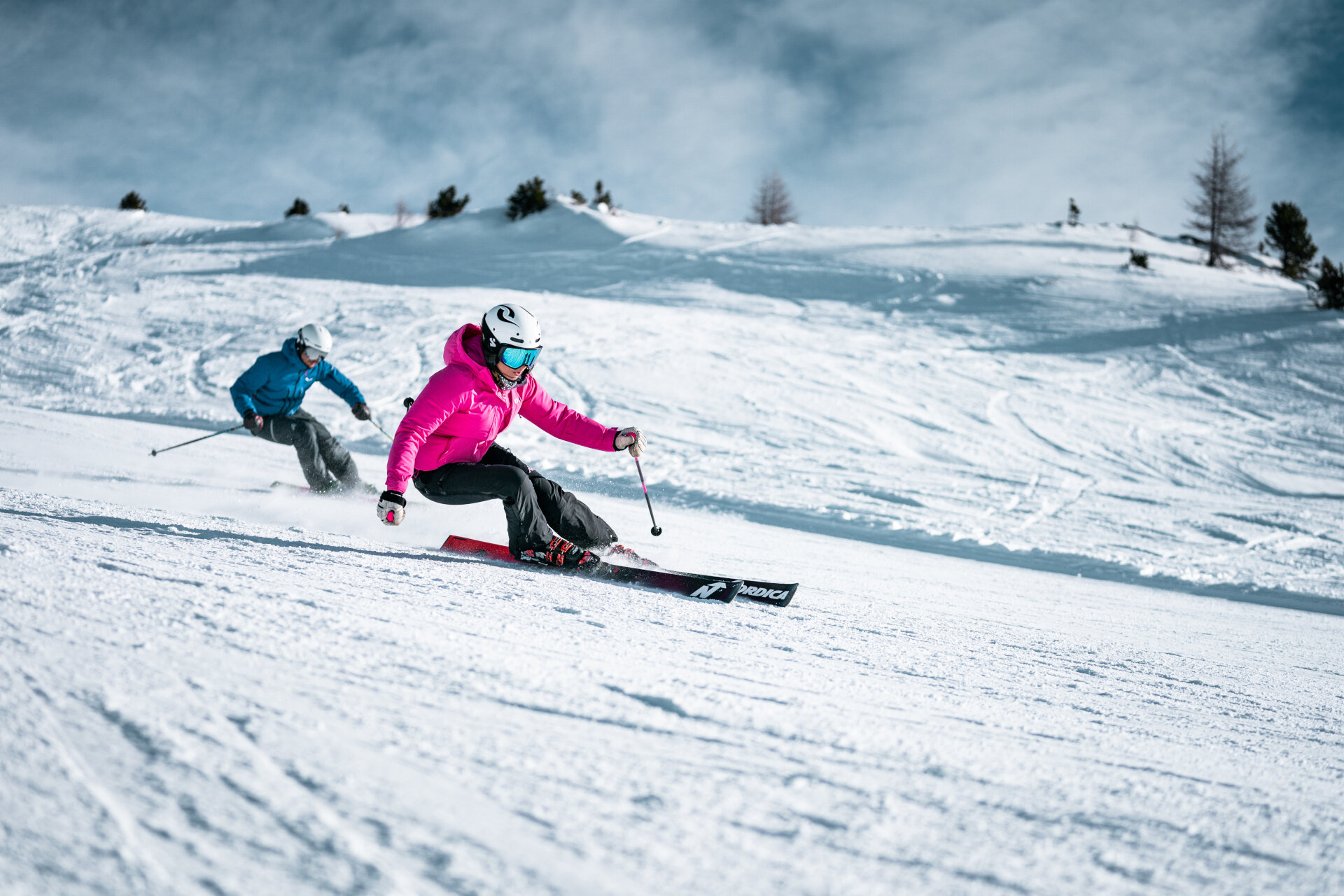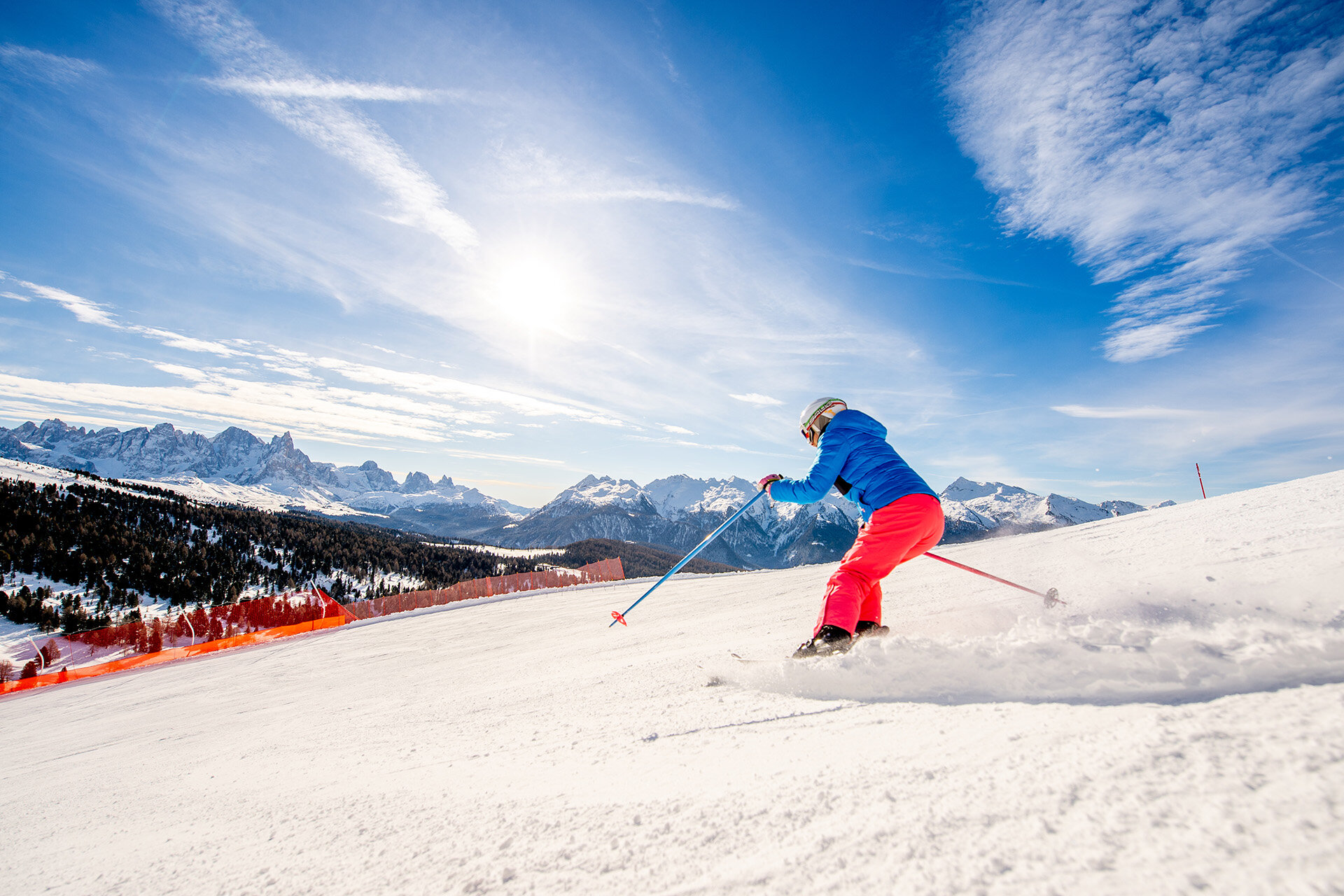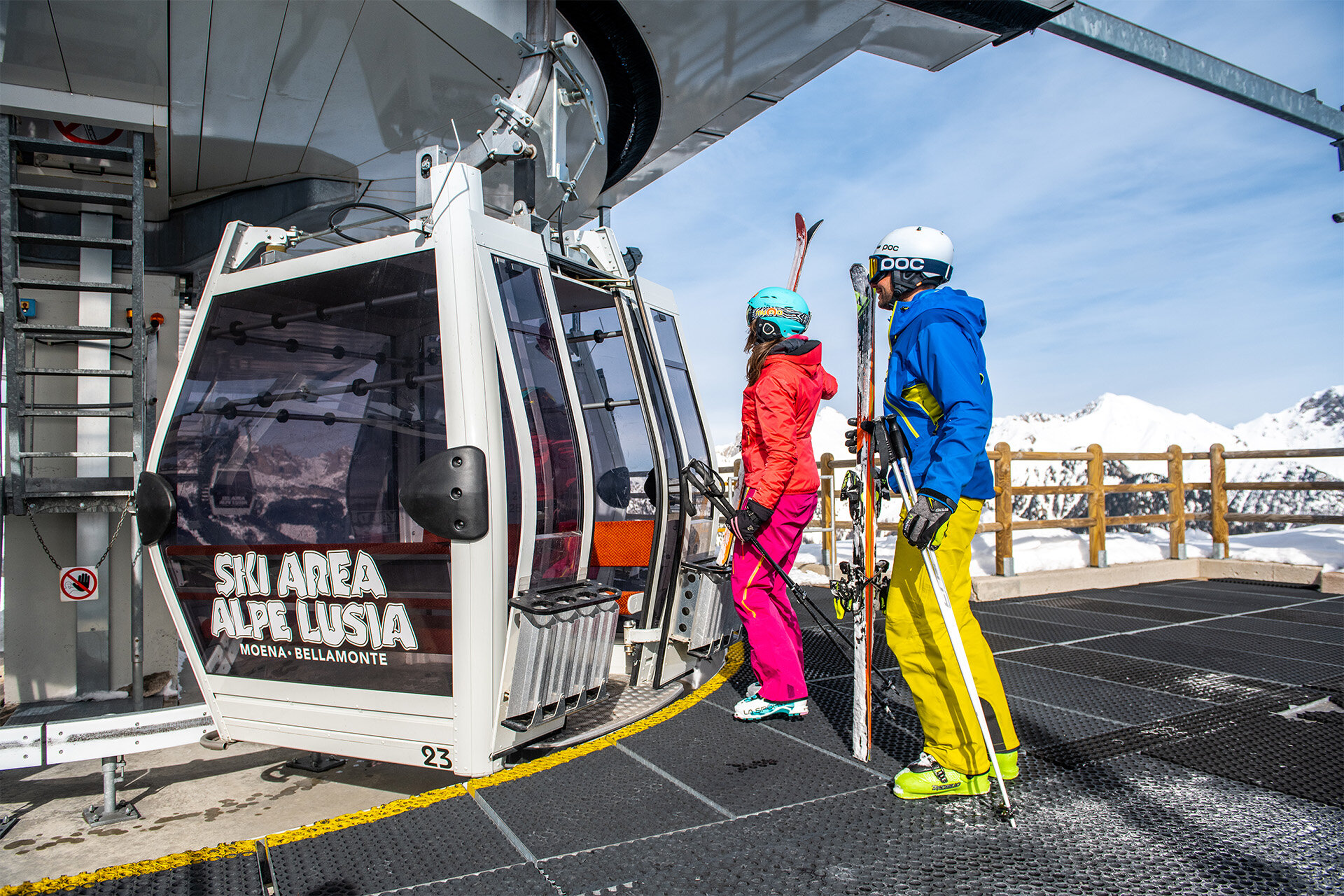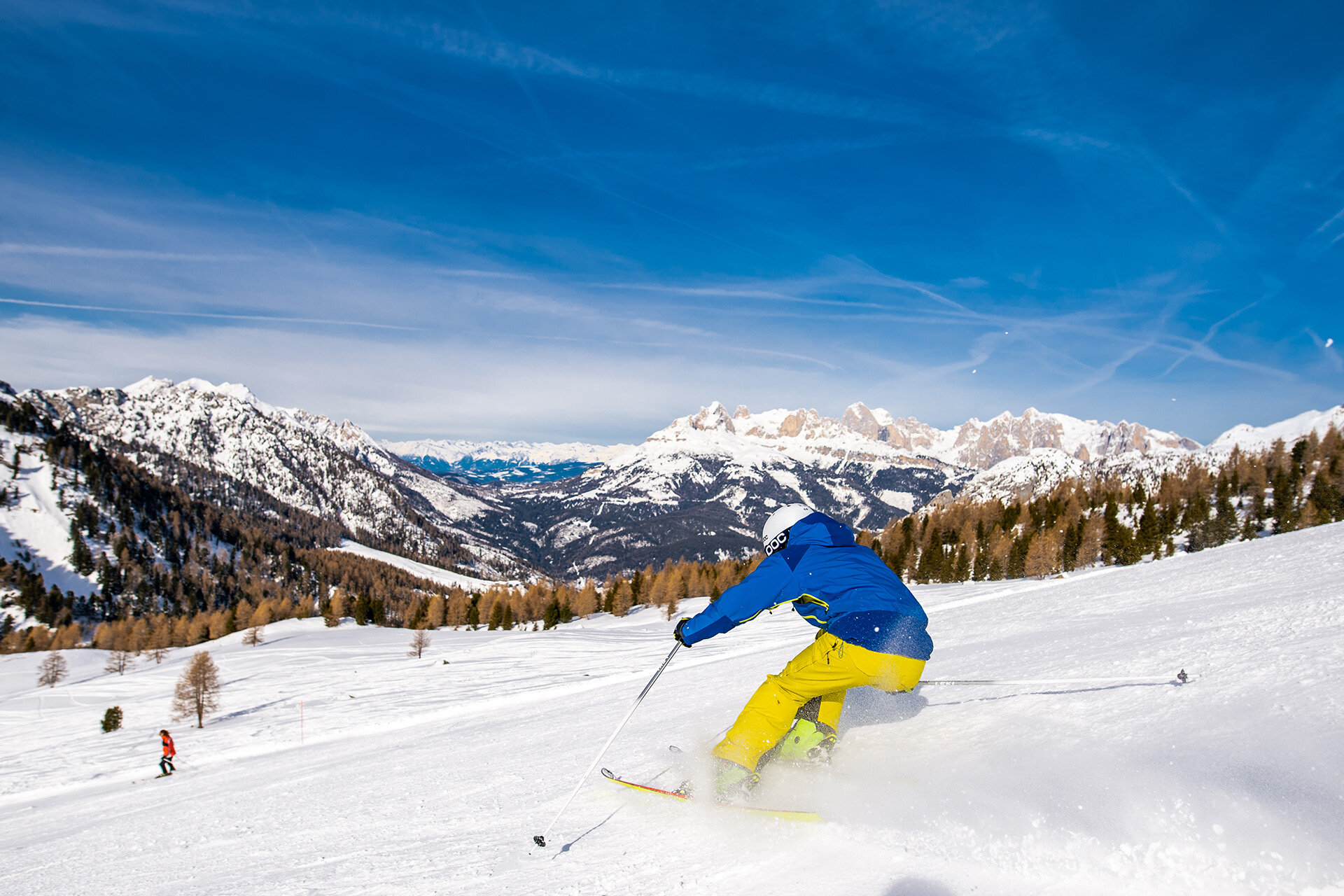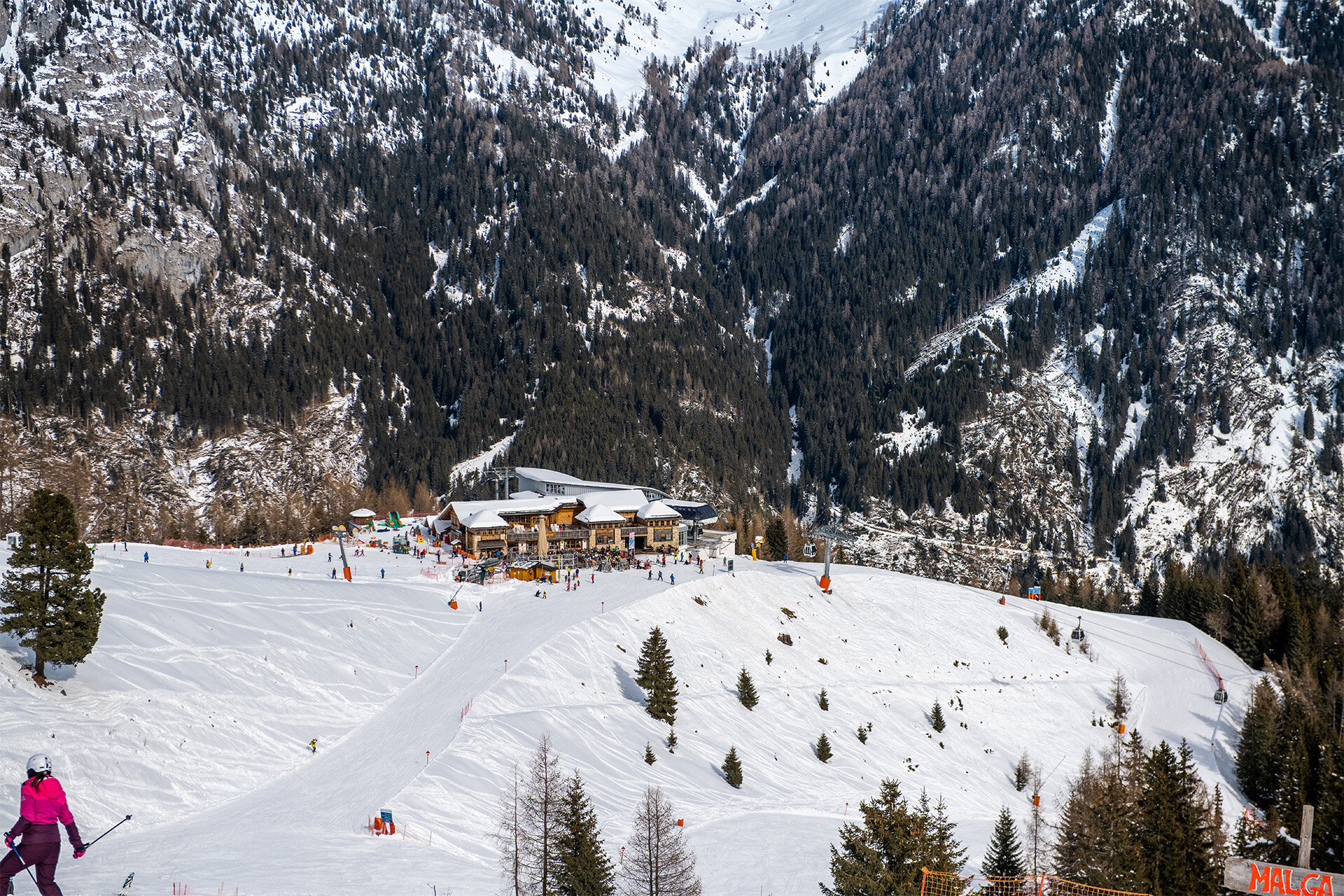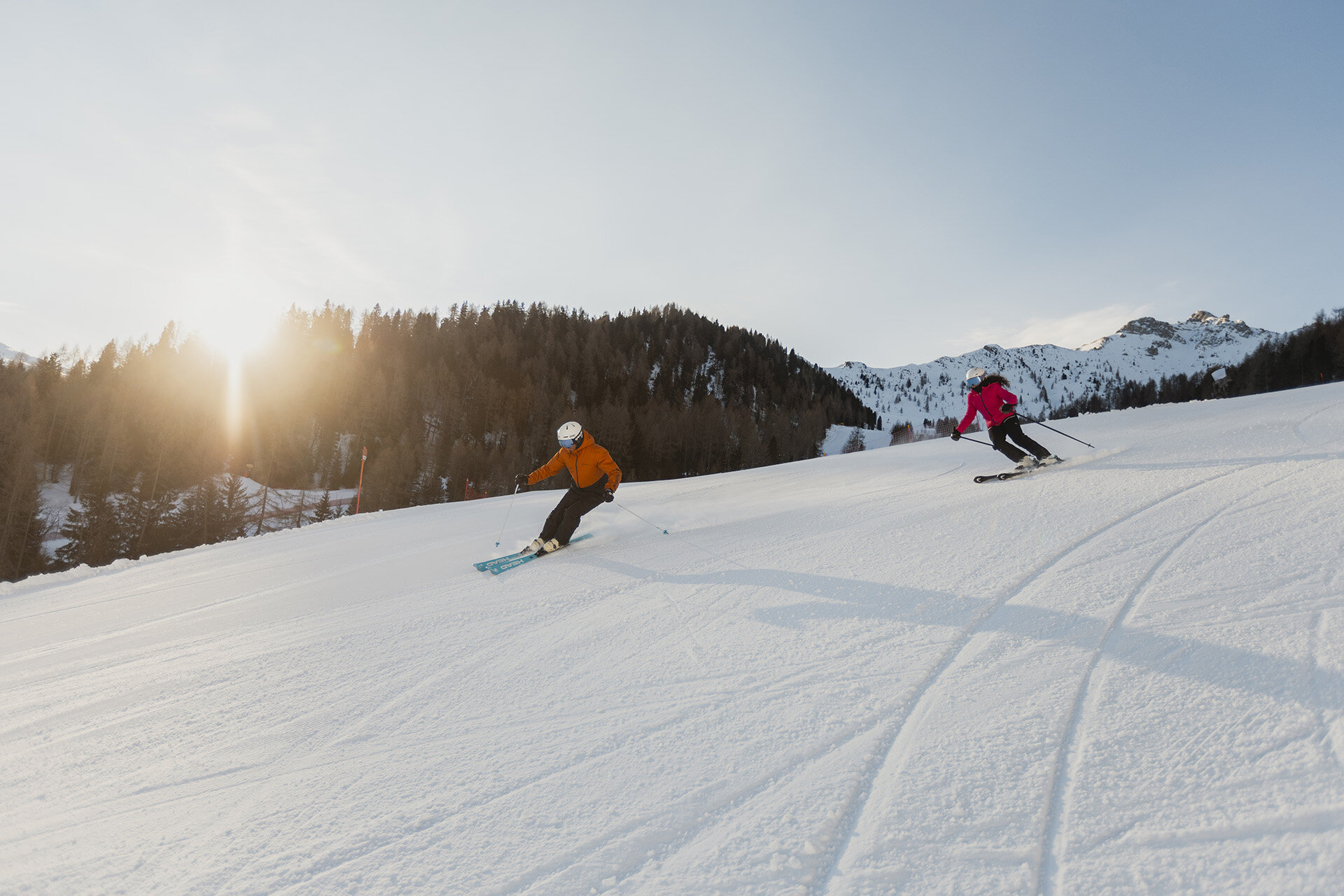
At Alpe Lusia, simply crossing from one side of the mountain to the other is enough to transform your skiing experience. On the Moena side, the north-facing slopes hold firmer snow and invite you to take on more challenging runs; on the Bellamonte side, the sun warms gentle, naturally undulating slopes - perfect for taking it easy, finding your rhythm or enjoying the snow with the whole family. In between lies Le Cune, at 2,200 metres, set along a natural mountain ridge and offering a spectacular balcony over the Dolomites. The view stretches from the Latemar to the Catinaccio, and from the Pale di San Martino to the Lagorai range.
Moena - Alpe Lusia ski area
Slopes and lifts
| Lift | Open / Closed | Connected slopes | Open / Closed | ||||||||||||||||||||||||||||
|---|---|---|---|---|---|---|---|---|---|---|---|---|---|---|---|---|---|---|---|---|---|---|---|---|---|---|---|---|---|---|---|
|
|
|
|||||||||||||||||||||||||||||
|
08:30-16:00; For non-skiers too |
|||||||||||||||||||||||||||||||
|
|
|
|||||||||||||||||||||||||||||
|
08:30-16:00; For non-skiers too |
|||||||||||||||||||||||||||||||
|
|
|
|||||||||||||||||||||||||||||
|
08:30-16:00 |
|||||||||||||||||||||||||||||||
|
|
|
|||||||||||||||||||||||||||||
|
08:30-16:15 |
|||||||||||||||||||||||||||||||
|
|
|
|||||||||||||||||||||||||||||
|
08:30-16:15 |
|||||||||||||||||||||||||||||||
|
|
|
|||||||||||||||||||||||||||||
|
Open from 07/12; 08:30-15:45 |
|||||||||||||||||||||||||||||||
|
|
|
|||||||||||||||||||||||||||||
|
08:30-16:15; For non-skiers too |
|||||||||||||||||||||||||||||||
|
|
|
|||||||||||||||||||||||||||||
|
08:30-16:15; For non-skiers too |
|||||||||||||||||||||||||||||||
Moena - Alpe Lusia ski area
You won't get lost on Lusia - at most, you'll simply choose a different run.
Just a few kilometres from Moena, Ronchi is the gateway to Alpe Lusia from the Fassa Valley. You can reach it by car or by ski bus, which connects Lusia with Passo San Pellegrino. The gondola takes you up to Valbona and Le Cune. From here, the ski area immediately reveals its two distinct sides: on one side, the north-facing slopes; on the other, the sunnier side opens towards Castelir and Bellamonte in Val di Fiemme.
On the Fassa Valley side, the skiing becomes more demanding: four black runs make Lusia particularly appealing to experienced skiers and World Cup athletes who choose the area for training. The Piavac, with its famous steep opening section, is one of the ski area's defining features.
From Le Cune, a short traverse along the ridge is all it takes to change the pace. Towards Bellamonte, the slopes become gentler but remain naturally undulating. This is the ideal side for warming up your legs in the morning, getting your ski legs back or simply stretching out your turns all the way to Castelir, perhaps following the ski trail through the woods.
This part of the ski area is particularly well suited to skiers with disabilities and visually impaired skiers. SportABILI Onlus in Predazzo, which has been active for more than twenty years, organises guided skiing and lessons with specialised instructors from the Guardia di Finanza and qualified volunteers.
It is precisely this ability to move between different types of terrain that makes a day at Lusia so distinctive. Set off early from Moena and you can head up to Le Cune, ski down towards Campo, continue to Lasté and then on to Castelir, before climbing back up and returning via Valbona and Ronchi. The layout of the lifts and runs is straightforward and easy to follow: you can switch between runs and difficulty levels without losing your bearings. If you prefer jumps and tricks to carving turns, the Morea Snowpark offers a well-equipped setting for freestyle, with features for both beginners and more experienced riders. For even more variety, there are boardercross, fun slopes and self-timed courses.
Both sides of the ski area offer dedicated areas for children and beginners, with ski schools, play areas and heated indoor facilities. In Valbona, in particular, the ski school is served by the ski area's only drag lift - a simple way to practise those first turns without having to venture straight onto the main slopes.
It is also worth taking a break from skiing at Lusia. The gondolas from Ronchi and Bellamonte allow non-skiers to reach the higher areas comfortably, where mountain huts and panoramic terraces await. There are also signposted routes for snowshoeing and ski touring towards Malga Bocche, as well as a toboggan run. Along the slopes, small private huts dot the landscape - understated reminders of how these mountains have been used and enjoyed throughout the year.
From Le Cune, the panorama opens out towards Latemar and Pampeago, Passo Costalunga and Catinaccio, the San Pellegrino Valley, the Pale di San Martino with Cimon de la Pala and, beyond them, the Lagorai range. As you descend towards Bellamonte, the area around the Passo Lusia mountain hut marks the entrance to the Paneveggio-Pale di San Martino Nature Park. The landscape also carries traces of a different chapter of history. Near Lasté, two distinctive wooden-and-stone huts mark the beginning of the old Austrian military mule track which, in summer, climbs towards the Lusia Lakes. When the snow recedes, the ski slopes give way to hiking trails and pastures, while traces of the First World War emerge once again along the way.
The connection between Moena and Alpe Lusia is set to become even closer. The new 10-seater gondola linking the Navalge area with Valbona is now moving forward, creating a direct connection to the ski area from the centre of Moena. The project received the go-ahead for its implementation in 2026.
The Alpe Lusia/San Pellegrino, Valle Silver and Dolomiti Superski ski passes are valid at Alpe Lusia.
Save money and buy your ski pass online
With Alpe Lusia/San Pellegrino ski pass, you can ski in the Moena Alpe Lusia and San Pellegrino - Falcade ski areas.